Reliable internet is becoming basic infrastructure for education, business, health, agriculture and government. Uganda has expanded national fibre and mobile coverage, yet many rural communities still experience weak signals, high data costs, limited electricity and few suitable devices. Closing this gap is not only a communications objective. It can expand markets, improve public services and allow innovation to emerge outside the largest cities.
Coverage statistics need to reflect actual experience. A parish may appear covered because a signal is technically available outdoors while homes, schools and health centres receive unstable service. Regulators and operators should measure speed, latency, reliability and affordability at local level. Publishing comparable data would help communities understand performance and guide investment toward underserved areas.
Infrastructure sharing can reduce costs. Towers, fibre routes, ducts and power systems should be shared where technically and commercially reasonable. Unnecessary duplication in profitable areas can exist alongside no service in remote areas. Transparent access rules and dispute resolution can encourage competition without requiring every provider to rebuild the same foundation.
The universal service framework should target clear gaps. Projects need public criteria, measurable service requirements and independent verification. Subsidies should support areas that would not otherwise receive adequate investment, rather than replace private spending in commercially attractive markets. Contracts must include maintenance and performance obligations beyond the launch ceremony.
Electricity is part of connectivity. Network equipment, public access points and user devices depend on stable power. Solar and other decentralised energy solutions can support remote sites, but they require protection, battery replacement and local maintenance capacity. Connectivity plans should be coordinated with rural electrification and public-facility investment.
Affordability involves more than lowering headline bundle prices. Consumers need transparent information about validity periods, speed limits and out-of-bundle charges. Community networks, public Wi-Fi and shared digital centres may help learners and small businesses, provided they are secure and sustainably managed. Tax, spectrum and infrastructure policies should be evaluated for their effect on end-user prices.
Schools and health centres can serve as anchor institutions. Connecting them creates immediate public value and can make surrounding network investment more viable. However, installation without internal Wi-Fi, devices, technical support and content produces limited benefit. Budgets should cover ongoing service, equipment replacement and cybersecurity.
Agriculture offers practical applications. Farmers can access weather forecasts, market information, extension advice, mobile finance and buyer networks. Services must work on affordable phones, use local languages and provide information relevant to the user’s location. Digital tools should complement field officers, cooperatives and radio rather than assume every problem can be solved through an application.
Rural businesses can reach customers and suppliers beyond their immediate market. Digital payments and online records may improve efficiency and access to finance. Training is still necessary because first-time users face fraud, poor-quality platforms and unfamiliar business processes. Women and persons with disabilities may need targeted support to overcome gaps in device ownership, mobility or accessible design.
Local technical capacity strengthens sustainability. Young people can be trained to install networks, repair devices, manage public access centres and support cybersecurity. District-based developers and entrepreneurs understand regional needs and languages. Innovation hubs, universities and procurement opportunities should reach secondary cities and rural regions instead of concentrating all support in Kampala.
Data protection and online safety must grow with access. New users should understand passwords, fraud, privacy and harmful content. Public institutions and providers need clear reporting channels for abuse and service failures. Digital inclusion is not complete when a person connects but cannot use the internet safely.
Rural broadband will not transform communities by itself. Its impact depends on electricity, skills, devices, relevant services and functioning local economies. Nevertheless, it can remove the distance that limits opportunity. Uganda’s next wave of innovation may come from a farmer, student, health worker or entrepreneur far from the capital. Affordable and reliable connectivity gives that person a chance to participate.
Sources: Uganda Communications Commission, https://www.ucc.co.ug/; National Information Technology Authority–Uganda, https://www.nita.go.ug/; Ministry of ICT and National Guidance, https://ict.go.ug/.
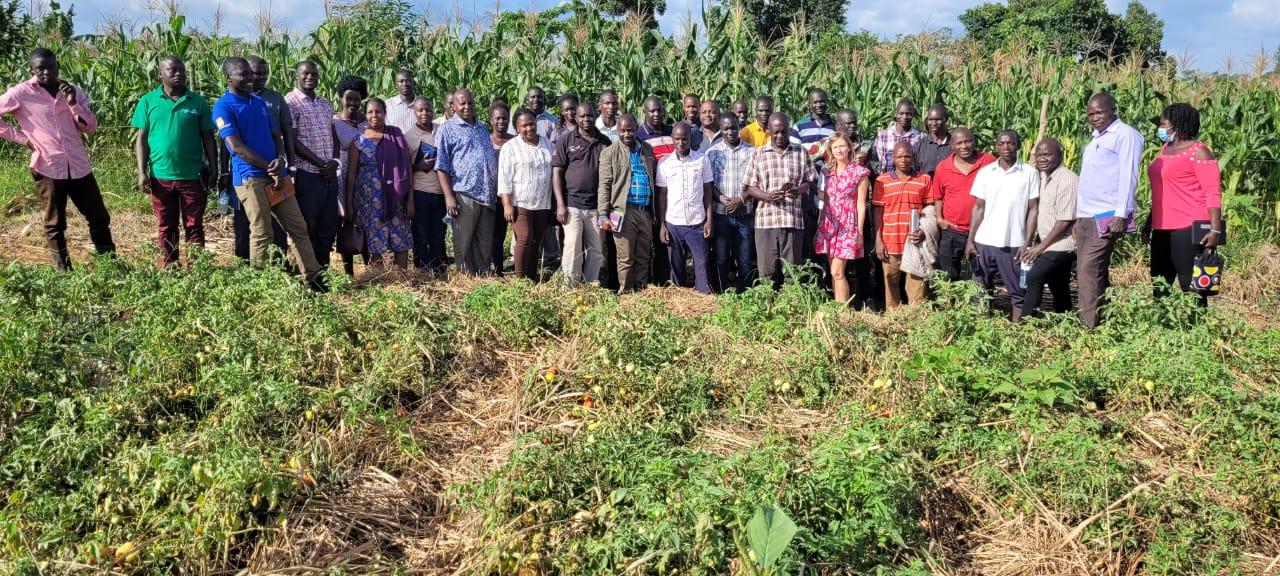
Photo credit: UNDP Uganda.